
A Look Inside Myanmar's First Community Centers
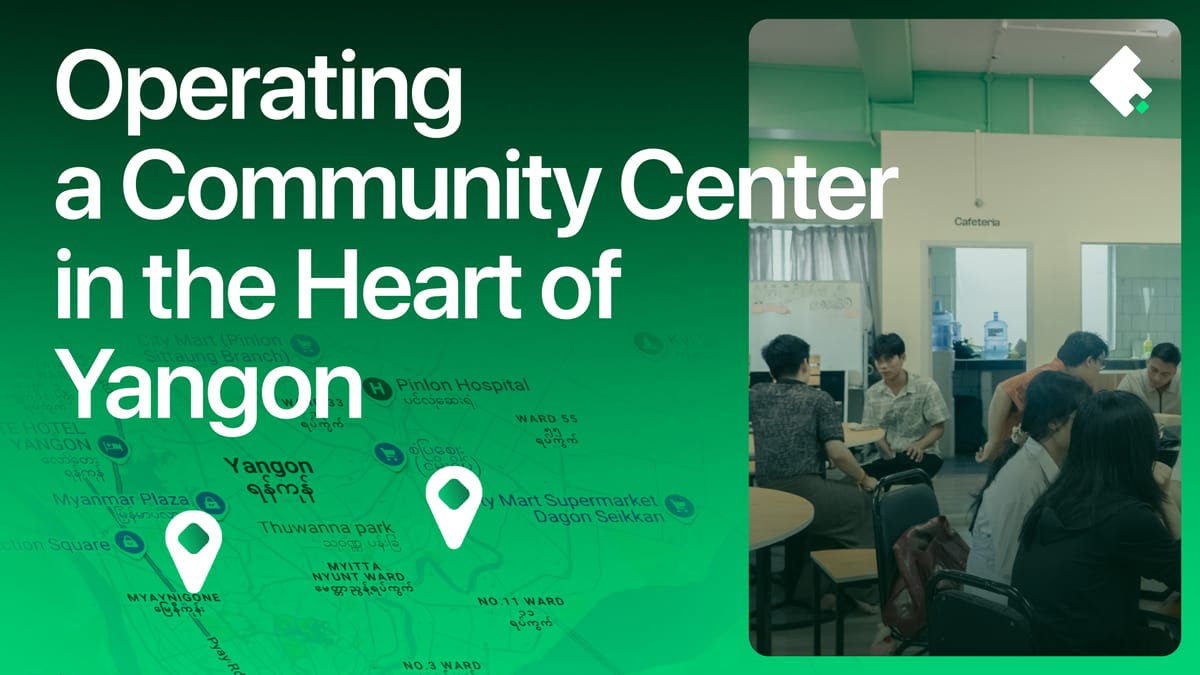
What It's Really Like to Operate Our Community Centers in the Heart of Yangon
When people visit our Build Myanmar Community Centers, they see the polished final product—modern co-working spaces with reliable wifi, comfortable seating, and spaces buzzing with activity. What they don't see is the daily reality behind the scenes: the early morning troubleshooting when systems fail, the constant juggling of multiple events in shared spaces, and the creative problem-solving required to make everything work in Yangon's challenging environment.
We wanted to share an honest look at what it really takes to run community centers here, because the story behind the scenes is just as important as what happens in front of the cameras.
Build Myanmar Community Center 2: Teaser
The Reality Check: It's More Complex Than It Looks
"Operating two centers simultaneously is far more complex than it appears on the surface," admits Min Z, our head of operations. Every single day involves juggling multiple demanding tasks: maintaining facilities, cleaning spaces, and constantly reconfiguring layouts since our centers serve multiple purposes—from co-working spaces to event venues to production studios.
One moment we're setting up for a panel discussion, the next we're rearranging furniture for a workshop, then pivoting to accommodate a private event rental. It's like running three different businesses in the same space, sometimes simultaneously.
Our team includes operation assistants, event managers, and counter staff, supported by our broader foundation team. "Managing space capacity becomes critical during weekends when we have multiple community events running simultaneously," explains Jessica, our Center Manager. "We have to carefully coordinate scheduling to ensure each event has adequate space and resources."
The Financial Reality: Balancing Impact and Sustainability
Let's be honest about the numbers. "Revenue generation remains our biggest operational challenge and significantly limits our ability to expand programs," Min Z acknowledges. We operate on multiple revenue streams—memberships, day passes, events, local partnerships, and private event rentals—but the economics are tough.
Our biggest expenses include renovation costs and ongoing maintenance, plus substantial monthly outlays for utilities, rent, and staffing. "Event production is particularly costly since we handle everything in-house," adds Jessica. "From setup to coordination, every event requires significant resource allocation."
We're constantly working on developing sustainable revenue models that can bridge the gap between our social impact goals and operational costs. It's a challenge that keeps us up at night, but it's also what drives us to be creative and efficient with every resource we have.
Design That Builds Community
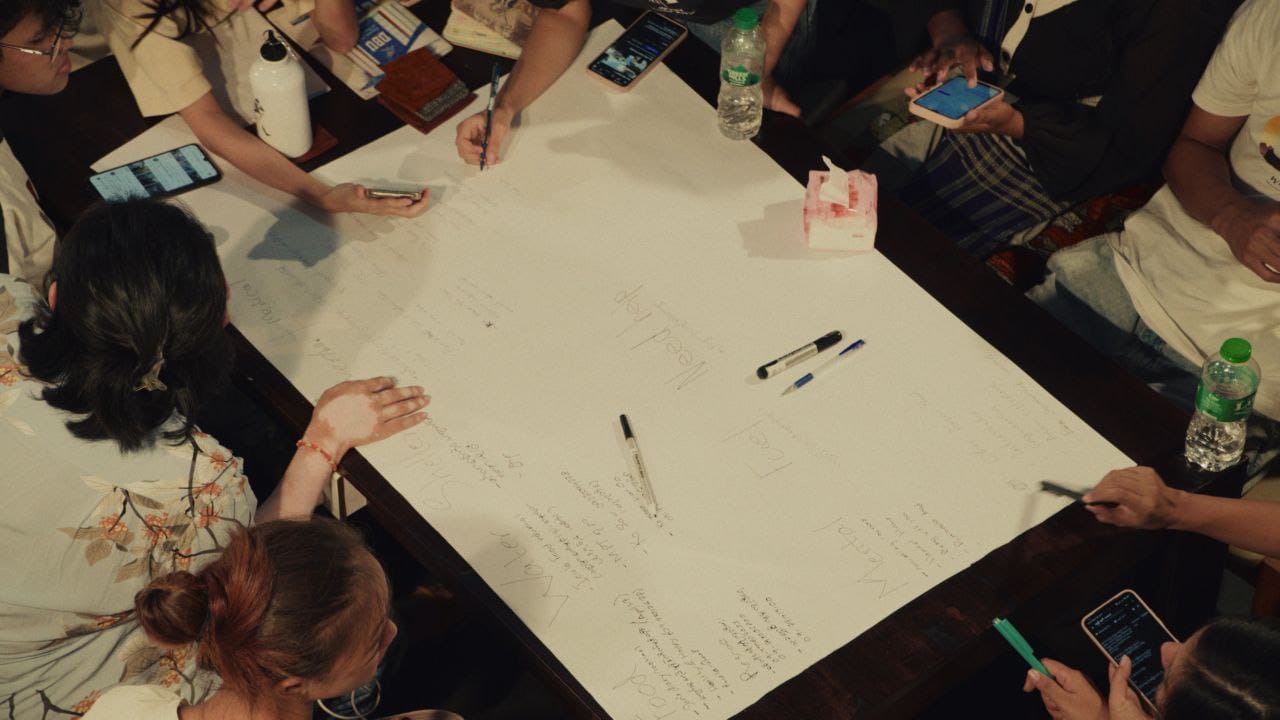
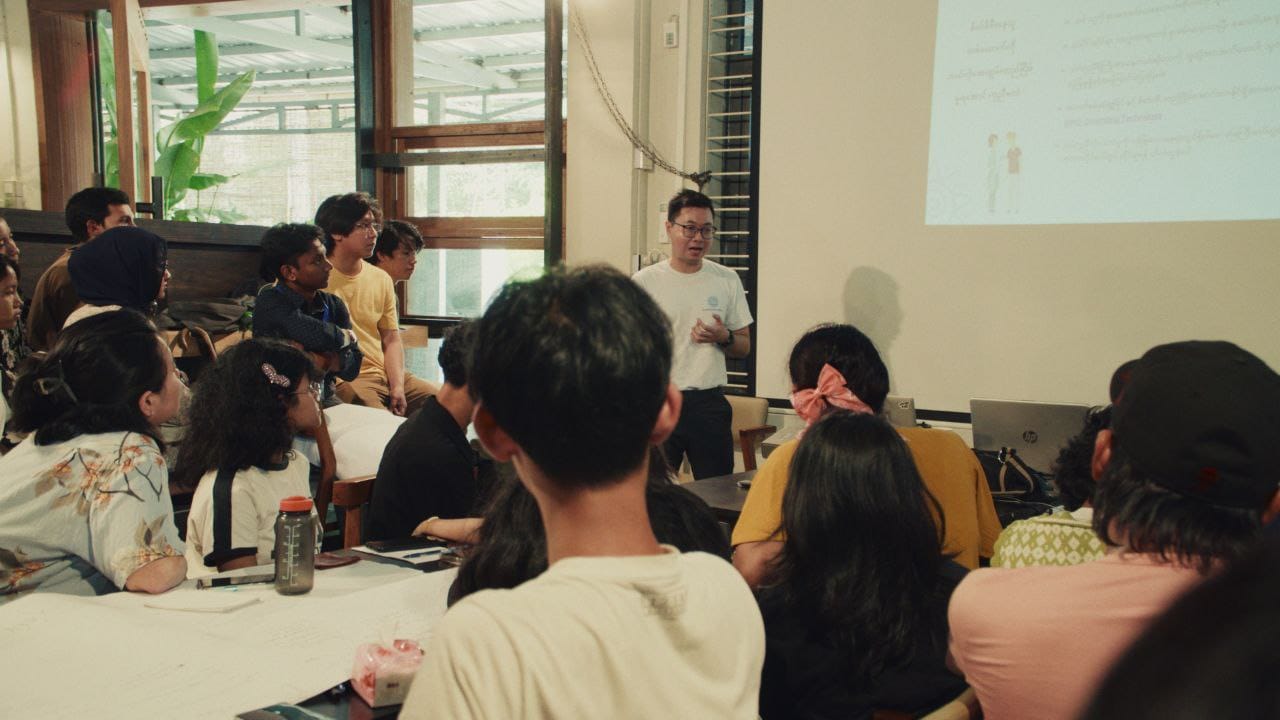
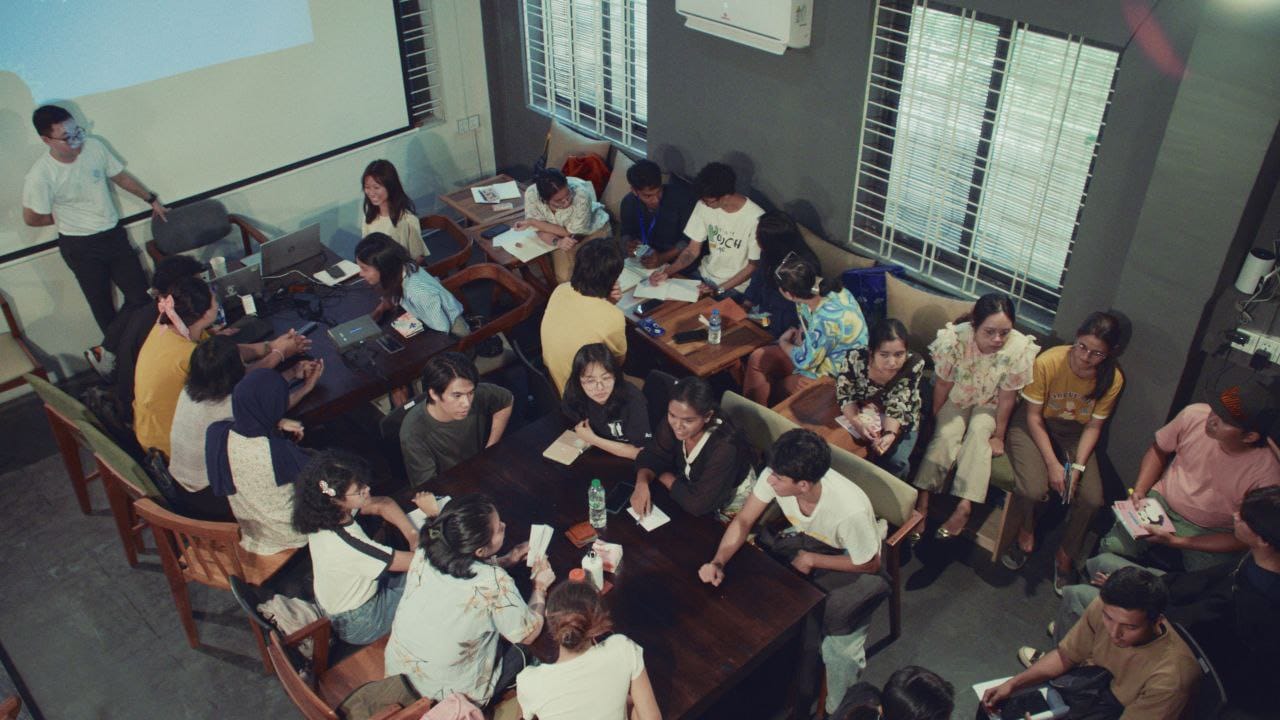
When we renovated our second center in Myaynigone, we didn't just pick colors and furniture randomly. "Every design choice, from wall colors to furniture selection, is intentionally made to foster community connection," explains Min Z. Those circular tables you see? They're specifically chosen to encourage collective, community-style interactions rather than individual work.
The renovation process itself was exhausting. We completely gutted the space, removing all existing paint, lighting, and furniture. Our team personally measured every dimension, selected lighting installations, and coordinated the entire transformation. It was hands-on work that taught us exactly how challenging it is to create truly functional community spaces.
Our kitchens and cafeteria areas aren't just amenities—they're strategic community-building tools, creating opportunities for informal conversations and relationship building beyond our formal programming.
Watch our Build Myanmar’s Second Community Center (Impact Recap)
Programming That Actually Works
After trying various approaches, we've learned what really drives engagement. "Our networking events and panel discussions consistently generate the highest engagement levels," reports Jessica. "We bring in experts from various fields, and participants consistently gain valuable knowledge and connections, whether in business or innovation."
It's not enough to just provide space—we have to actively create opportunities for people to connect, learn, and collaborate. These programs reflect our understanding that Myanmar's development needs require not just individual skill building, but the creation of professional networks and collaborative relationships.
The Yangon Challenge: Infrastructure Reality
Here's what makes operating in Yangon uniquely difficult. "The accessibility issues in Yangon are unlike anywhere else in the world," explains Min Z. "Essential resources like wifi and electricity frequently get cut off, creating constant operational disruptions."
This isn't theoretical—it's our daily reality. We maintain multiple wifi connections and keep fully-charged solar inverters ready to kick in when the main power grid fails. We've learned to build redundancy into everything because we can't count on basic infrastructure being reliable.
"Everything becomes exponentially more difficult in Yangon," Min Z notes. As he puts it: "Even when you have the motivation and desire to accomplish something, you often encounter situations where execution becomes impossible. Enduring and overcoming these systemic challenges requires tremendous resilience."
This affects everyone, not just us. Most young people face these same resource constraints, which contributes to brain drain as talented youth increasingly look for opportunities abroad.
Strategic Growth: Location and Vision
When we selected our second location, accessibility was everything. We chose a busy downtown Yangon spot near major transportation hubs—a strategic area where young people naturally gather. Location isn't just about convenience; it's about being embedded in the communities we serve.
"If operations continue successfully, we're planning to expand to cities like Mandalay," Min Z explains. We know that real community development impact requires presence across multiple urban centers, not just concentration in one area.
Our Second Community Center. A Space. And A Community.
How We Measure Real Success
Membership numbers and revenue are important, but they don't tell the whole story. "Our mission centers on helping young people progress and develop while fostering unity," explains Min Z. "We want to combine the best minds to create innovative solutions that benefit the broader community."
"Event attendance often exceeds our membership numbers," notes Jessica. "This shows we're serving as catalysts for broader community engagement beyond our immediate user base." When we see participants making valuable connections, launching collaborations, or gaining skills they apply in their careers, that's when we know we're succeeding.
Changing Culture, One Interaction at a Time
One of our biggest challenges isn't operational—it's cultural. "Myanmar lacks a strong community-driven mindset," observes Min Z. "Many young people have world-class individual capabilities, but they often work in isolation. There's a weakness in collaborative organizational approaches—people tend to operate independently rather than collectively."
This is exactly why our centers exist. "Myanmar's community space infrastructure is still underdeveloped, but we're gradually introducing collaborative culture. We want young people to be more united and to see their collective capabilities flourish."
Every day, we're working to shift this dynamic through our programming, space design, and community interactions.
Watch our very first center's introduction too!
Daily Problem-Solving
Managing community dynamics is an ongoing balancing act. "We address challenges by honestly assessing our current situation," explains Min Z. "Since we're still developing our processes, there are gaps in our operations that we're continuously working to fill."
"Every day brings different member needs and concerns," our counter staff note. "We have to balance being responsive to individual requests while maintaining smooth operations for everyone."
Sometimes it's mediating workspace conflicts, other times it's coordinating last-minute event changes, or finding creative solutions when equipment fails. The key is maintaining collective decision-making while keeping operations efficient—crucial when delayed decisions can significantly impact everyone's day.
Why We Do This Work
Despite the challenges—the infrastructure problems, financial pressures, and daily operational complexities—we continue this work because we see its impact. Our community centers serve as testing grounds for demonstrating that collaborative, community-driven approaches can address Myanmar's complex challenges more effectively than individual efforts alone.
We're not just providing workspace or organizing events. We're building the social infrastructure necessary for a more collaborative and prosperous Myanmar. It happens one renovation project at a time, one networking event at a time, one young person's expanded capability at a time.
The daily reality of fixing broken equipment, cleaning spaces, and constantly rearranging layouts might seem mundane, but it represents something much larger: the patient, persistent work of creating spaces where Myanmar's abundant talent can come together to tackle our biggest challenges.
That's what gets us up every morning, even when the wifi is down and we're running on generator power. Because in those moments when we see genuine collaboration happening, when we witness new partnerships forming, or when young innovators find the support they need to pursue their ideas—that's when we know all the behind-the-scenes work is worth it.
This is our reality. It's challenging, exhausting, and incredibly rewarding. And we're just getting started.
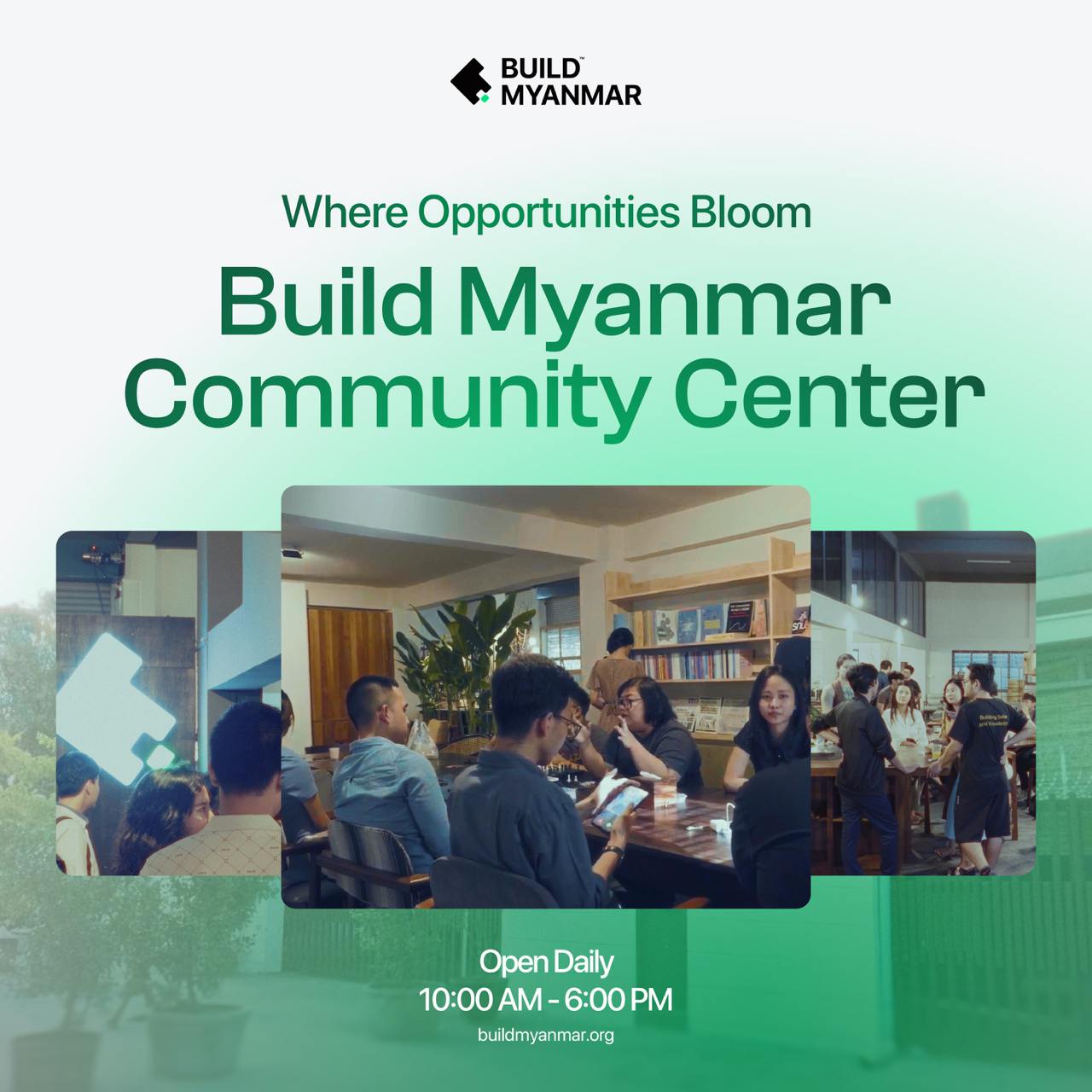
Where Opportunities Bloom
Myanmar – a place where creativity, learning, and connection come together. The Build Myanmar Community Center is the ultimate solution for youth seeking inspiration and opportunity.
This innovative center offers:
- Fully-equipped spaces with high-speed internet
- Flexible co-working areas for collaboration
- Networking opportunities
- Diverse workshops led by experts from various fields
- A comprehensive library for knowledge seekers
- Maker spaces to fuel creativity and innovation
Interested in transforming your potential? Explore the link below and discover a world of possibilities.
📰 Explore more:
- Website: https://www.buildmyanmar.org
- Facebook: https://www.facebook.com/buildmyanmarorg
- YouTube: https://youtube.com/@buildmyanmarmedia
- Telegram: https://t.me/+6_0G6CLwrwMwZTIx
- Inquiry: [email protected]